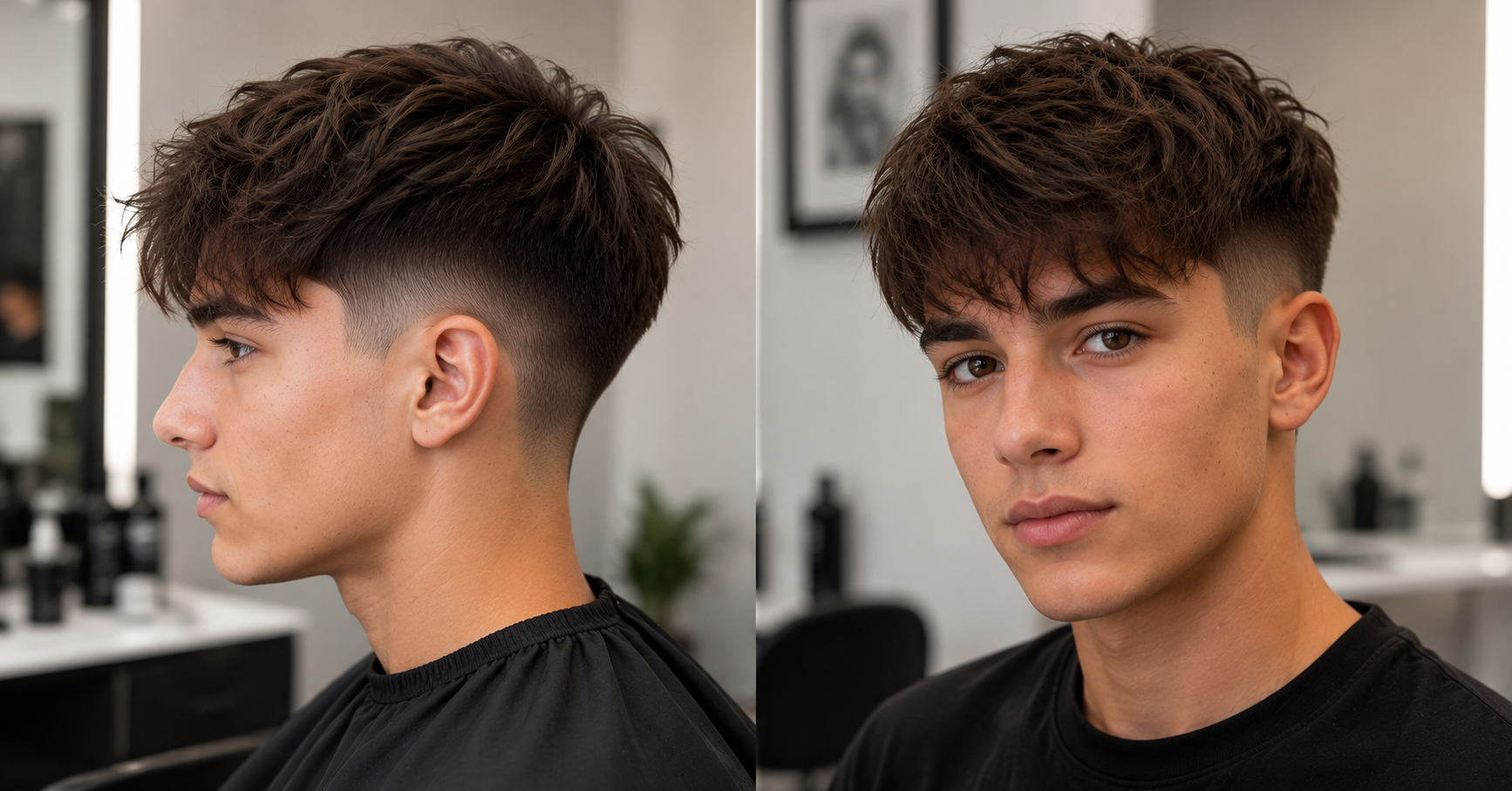
Modern bob haircut styles have moved far past the blunt, one-length cut of the 1920s. The bob has stayed one of the most-requested cuts at barbershops and salons for years — its 2026 comeback has more to do with texture and customization than a single defining look. The modern bob has moved beyond women’s hairstyling — more men are now requesting textured, chin-length cuts that blend classic bob shaping with barbershop precision.
Clients today increasingly ask for a bob that photographs well but still moves naturally when walking — a shift that has reshaped how the cut is approached.
This modern bob haircut guide breaks down six real variations, exact face-shape matches with measurements, a step-by-step styling routine, and a realistic maintenance schedule — the details most generic guides skip.
What Actually Makes a Bob “Modern” in 2026
The classic 1920s bob sat at a single length, usually 1 inch below the ear, cut with a straight razor for a blunt, geometric edge. It worked on straight, thick hair but looked heavy on fine or curly textures.
The modern version keeps the same base length but adds face-framing layers cut at a 45-degree angle, plus point-cutting at the ends to break up the line. This single change — angled layering instead of a flat blunt cut — is what separates a 2026 bob from a 1960s one.
Stylists now also vary the length by 1 to 2 inches from front to back, a technique called “graduated bob” or “lob,” which adds the sense of movement clients ask for.
Key Cutting Techniques Behind the Modern Bob
Face-framing layers are cut starting from the cheekbone, angled toward the chin, usually 2 to 3 inches shorter than the back length. This removes the boxy silhouette common in older bobs and works on both fine and thick hair.
Point-cutting and texturizing techniques discussed here follow the same principles used in textured crop haircuts, where movement and natural-looking layers matter more than a single hard line.
6 Popular Modern Bob Variations
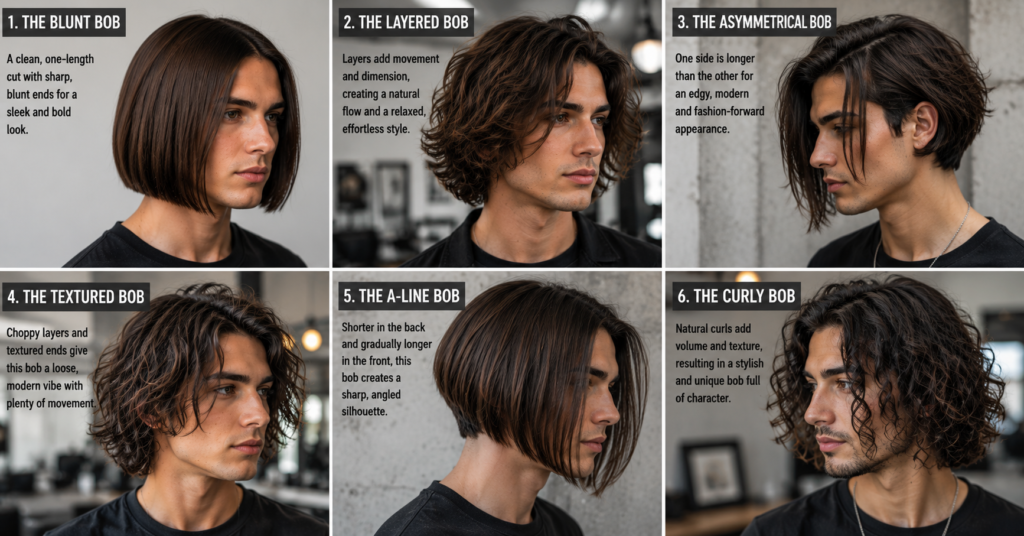
1. The Blunt Bob
Cut at one length, usually chin to jaw level (roughly 4 to 6 inches), with a hard, straight edge and no layering. It suits thick, straight hair because the weight of the hair holds the shape without extra styling.
Because there are no layers to blend, this cut needs shorter salon visits — most stylists finish a blunt bob trim in 20 to 25 minutes.
2. The Layered Bob
Layers are cut throughout the mid-lengths and ends, usually starting 2 inches above the base length. This works well for fine or thin hair, since shorter layers sit closer to the head and create the appearance of extra density.
It also grows out more evenly than a blunt cut — the layers hide the awkward “growing out” stage for roughly 3 to 4 extra weeks.
3. The Asymmetrical Bob
One side is cut noticeably shorter, typically a 1.5 to 3 inch difference between the two sides. This creates an intentional, off-balance line that reads as bold rather than uneven.
This style photographs well from three-quarter angles and tends to suit people with strong, angular jawlines who want the cut itself to be the statement.
4. The Textured Bob
Built using choppy point-cuts throughout, this bob relies on uneven ends rather than a clean line. It works particularly well on wavy or curly hair (2A to 3A curl patterns), since the texture blends naturally with the curl instead of fighting it.
Because small imperfections blend into the texture, this bob can go 7 to 9 weeks between trims without looking unkempt — longer than most other variations.
5. The A-Line Bob
Shorter at the back and gradually longer toward the front, with a length difference of 2 to 4 inches. This shape draws the eye downward and elongates a round or square face more than a flat, single-length bob does.
6. The Curly Bob
Cut dry, curl by curl, so each curl springs up to its true length rather than being cut wet and ending up shorter than expected. This technique — called a “dry cut” — is standard practice for curl specialists and prevents the uneven bounce-back that ruins many curly bob attempts.Expert Tips for Choosing a Modern Bob Haircut
A modern bob looks best when the cut matches your hair type, natural texture, face shape, and preferred styling routine. Before choosing a specific bob, consider how your hair naturally falls and how much daily styling you want to do.
For Thick Hair
If you have thick hair, ask your barber or stylist to control excess weight without removing too much from the perimeter. Keeping the outer shape strong can help the bob look cleaner and more intentional.
For Fine Hair
Fine hair often benefits from a stronger, cleaner perimeter. Avoid excessive layering because too many short layers can make the ends look thinner. A blunt or softly layered bob can create a fuller-looking shape.
For Wavy Hair
Wavy hair can add natural movement to a modern bob. Ask for a shape that works with your natural wave pattern instead of fighting it with heavy styling. Light texturizing can help the hair move naturally while keeping the overall shape defined.
For Curly Hair
Curly hair needs extra attention to natural shrinkage and curl pattern. A barber or stylist should consider how much the curls contract when dry before deciding on the final length. A curly bob can work especially well when the shape follows the hair’s natural movement.
For Round Faces
If you have a round face, a slightly longer bob with vertical movement can help create a more elongated visual effect. Avoid choosing a very short, wide shape if you want to reduce emphasis on the width of the face.
For Oval Faces
Oval faces can usually accommodate a wider range of bob shapes. You can experiment with blunt, layered, textured, or asymmetrical versions depending on your hair type and preferred look.
Barber Consultation Tip
Before your haircut, show your barber a reference photo and explain the length, texture, and amount of layering you want. Instead of simply asking for a “modern bob,” describe the specific shape you want and mention whether you prefer a clean, textured, layered, or natural finish.
Which Modern Bob Should You Choose?
The best modern bob depends on your hair type, natural texture, face shape, and the amount of styling you want to do. Use this guide to compare the most suitable options.
| Hair Type | Face Shape | Recommended Bob | Why It Works |
|---|---|---|---|
| Thick and Straight | Oval or Square | Blunt Bob | The clean perimeter creates a strong shape while keeping thick hair looking polished. |
| Fine and Straight | Oval or Square | Layered Bob | Light layering can add movement without making the overall shape look too heavy. |
| Wavy Hair | Round or Oval | Textured Bob | The natural waves add movement and texture while helping create a softer outline. |
| Curly Hair | Oval or Heart | Curly Bob | The shape works with natural curls and can highlight texture without excessive styling. |
| Thick and Wavy | Round or Oval | A-Line Bob | The longer front can create a more defined outline while allowing natural movement. |
| Mixed or Uneven Texture | Most Face Shapes | Asymmetrical Bob | The uneven length creates a distinctive shape that can be adjusted to suit individual features. |
Quick tip: Treat face shape as a starting point rather than a strict rule. Your hair density, natural texture, preferred length, and daily styling routine should also influence the final bob choice.
Modern Bob vs. Lob vs. Layered Bob: What’s the Difference?
A modern bob, lob, and layered bob can look similar, but their length and structure create different results. Choosing between them depends on how short you want the haircut, how much movement you prefer, and how often you want to maintain the shape.
Modern Bob
A modern bob usually sits around the chin, jaw, or neck and can use blunt edges, texture, asymmetry, or face-framing layers. It works well when you want a noticeable haircut shape without keeping shoulder-length hair.
Lob
A lob, or long bob, extends beyond the traditional bob and usually falls closer to the shoulders. It gives you more styling flexibility and makes a useful choice if you want the bob shape without committing to a shorter length.
Layered Bob
A layered bob keeps the basic bob shape but removes weight through selected layers. It can create more movement and work particularly well when you want to avoid a heavy, one-length appearance.
Which One Should You Choose?
A layered bob is a good choice if you want more movement and less visual weight.
For a shorter and more defined shape, consider a modern bob.
If you prefer extra length and more styling options, a lob may suit you better.
Your hair texture also matters. Straight hair can show the exact shape more clearly, while wavy or curly hair can create a softer and more textured result.
How to Match a Modern Bob to Your Face Shape
Round faces: Choose an asymmetrical or A-line bob. Keep the length below the jaw. This helps create a longer appearance. Avoid a chin-length blunt bob. It can end at the widest part of the face and make the face look wider.
Square faces: Choose a layered bob with soft ends. Keep the length around the jaw or slightly below it. Soft layers can balance strong jawlines. Avoid a very hard, blunt edge if you want a softer appearance.
Oval faces: Most modern bob styles work well with an oval face. You can choose a blunt, layered, textured, or asymmetrical bob. Pick the style based on your hair type and the amount of daily styling you prefer.
Heart-shaped faces: A chin-length or slightly longer bob can balance a wider forehead. Soft layers around the jaw can also add visual width to the lower part of the face. Avoid excessive volume at the crown if you want a more balanced shape.
Long faces: A textured or layered bob can add width around the sides of the face. Waves and soft layers can also create a fuller appearance. Avoid keeping the bob extremely long and flat, as this can make the face look longer.
For more on how haircut length and shape interact with face structure, see our guide on matching short haircuts to face shape.https://barberstylehub.com/mens-short-haircuts/
What Barbers Recommend for a Modern Bob
Before getting a modern bob, show your barber clear reference photos from the front, side, and back. A photo helps your barber understand the shape, length, and amount of texture you want.
Tell your barber your natural hair type and how you normally style your hair. Straight, wavy, and curly hair can behave differently after the cut, so the same bob shape may need different cutting techniques for each texture.
If you have fine hair, ask your barber to preserve enough weight at the ends instead of adding too many layers. If you have thick or curly hair, discuss where the weight should be removed before deciding on the final shape.
Also explain how much daily styling you are willing to do. A precise blunt bob may need more regular maintenance to keep its shape, while a textured bob can offer a more relaxed grow-out.
The most useful approach is to choose the bob shape first, then adjust its length, texture, and layering to your hair type and face shape.
Step-by-Step Styling Routine
Apply a heat protectant spray rated for at least 400°F before any blow-drying or curling — this is the temperature most flat irons and curling wands reach on a mid-high setting, and skipping this step is the single biggest cause of split ends on bob-length hair.
Dry the roots first using a round brush, section by section, then smooth the mid-lengths and ends downward with the dryer nozzle pointed down the hair shaft to seal the cuticle.
For a textured, undone finish, work a texturizing spray into damp hair before drying, focusing on the ends rather than the roots, and finish with a light-hold pomade to define pieces without weighing the hair down.
Maintenance and Trim Schedule
Trim frequency depends on the variation, not a single blanket rule. Blunt and A-line bobs need a trim every 6 weeks to keep their sharp line; layered and textured bobs can stretch to 8 to 9 weeks since the layers disguise growth.
A weekly deep-conditioning treatment is worth adding if heat tools are used more than three times a week, since bob-length hair shows heat damage faster than longer styles simply because there’s less length to hide split or frayed ends.
Modern Bob Comparison Table
| Bob Type | Best For | Trim Frequency | Daily Styling Time |
|---|---|---|---|
| Blunt Bob | Thick, straight hair | Every 6 weeks | 5–10 min |
| Layered Bob | Fine or thin hair | Every 7–8 weeks | 10–15 min |
| Asymmetrical Bob | Strong, angular features | Every 6–7 weeks | 10–15 min |
| Textured Bob | Wavy or curly hair | Every 8–9 weeks | 5–10 min |
| A-Line Bob | Round or square faces | Every 6 weeks | 10 min |
| Curly Bob | Natural curl (2A–3A) | Every 8–10 weeks | 15–20 min |
Conclusion
The modern bob works because it’s no longer one haircut — it’s six or more distinct techniques, each suited to a specific hair type and face shape. Choosing the wrong variation, not the bob itself, is usually why a cut doesn’t work for someone.
Match your face shape and hair texture to the specific variation above, ask your stylist for the exact technique by name (point-cut, dry-cut, A-line), and follow the trim schedule that matches your cut — that’s the difference between a bob that looks intentional and one that just looks short.
Looking for more textured, low-maintenance options? Check out our guide to 30 textured messy hairstyles for men.https://barberstylehub.com/30-messy-hairstyles-for-men-2026/
FAQs
Frequently Asked Questions About Modern Bob Haircuts
1. What is a modern bob haircut?
A modern bob haircut is a contemporary version of the classic bob that combines a defined shape with updated elements such as texture, layers, tapered sides, asymmetry, or face-framing pieces. The best version depends on your hair type, face shape, and desired level of maintenance.
2. Which modern bob haircut is best for men?
The best modern bob for men depends on hair type and styling preference. A textured bob works well for wavy hair, a layered bob can add movement to straight or fine hair, and a curly bob can enhance natural curl patterns without removing too much length.
3. What modern bob is best for a round face?
A longer or layered modern bob can work well for a round face because it can create the appearance of more vertical length. Avoiding a bob that ends exactly at the widest part of the cheeks can also help create a more balanced shape.
4. Is a modern bob haircut good for thin or fine hair?
Yes. A blunt or lightly layered modern bob can make fine hair appear fuller by keeping more weight around the perimeter. Heavy layering can remove too much visual density, so the amount of layering should match the thickness of the hair.
5. Is a modern bob suitable for curly or wavy hair?
Yes. Modern bobs can work especially well with naturally wavy or curly hair when the cut accounts for the hair’s natural texture and shrinkage. Curly hair may benefit from a shape that is assessed at its natural curl pattern rather than relying only on measurements taken when the hair is wet.

I’m the founder of BarberStyleHub and a men’s grooming enthusiast who’s spent years researching haircut trends, fade techniques, and styling methods — from classic slick backs to modern mullets and everything in between. Every guide I write is based on deep research into professional cutting and styling techniques, cross-checked with barbering fundamentals, so you know exactly what to ask your barber. My goal is simple: help every man find the right haircut and feel confident walking out of the chair.