Introduction
The crew cut guide helps men choose the perfect hairstyle for every age and lifestyle. This crew cut guide works for teens, young adults, and mature men, making it versatile for school, work, or casual settings. Teens can follow this crew cut guide to try textured or messy crew cuts for a playful look, while young adults can use the crew cut guide to select modern crew cuts with fades or Ivy League variations for style and professionalism. Adults in their 30s often rely on this crew cut guide to maintain classic or mid-fade crew cuts for a polished appearance, and men over 45 benefit from the crew cut guide to choose short, low-maintenance cuts that keep hair tidy and sharp.
What Is a Classic Crew Cut?
The crew cut guide shows that the classic crew cut keeps the sides short and the top slightly longer. This crew cut guide explains how barbers taper the hair from the crown toward the forehead, creating a clean and structured shape. Following this crew cut guide, you can achieve a perfectly balanced and professional look with minimal effort.
Key Features
- Short sides and back (taper or fade)
- Gradually longer hair on top
- Natural front lift (not flat like a buzz cut)
Crew Cut vs. Buzz Cut: What’s the Difference?
Many people confuse these two styles, but they differ in structure and styling.
| Feature | Crew Cut | Buzz Cut |
| Length Variation | Yes (top longer than sides) | No (same length all over) |
| Styling Required | Minimal styling | No styling needed |
| Shape | Tapered and structured | Flat and uniform |
| Best For | Versatile looks | Ultra-low maintenance |
👉 You create shape in a crew cut, but you remove shape in a buzz cut.
Modern Crew Cut Fade: The Contemporary Upgrade
The modern crew cut adds a fade for a sharper and trendier finish.
Types of Fades You Can Choose
- Low Fade – subtle and professional
- Mid Fade – balanced and versatile
- High Fade – bold and edgy
- Skin Fade – ultra-clean contrast
Barbers blend the fade into the top using parietal ridge transition techniques to keep the look smooth.
Popular Crew Cut Variations
1. Textured Crew Cut
You add texture using scissors or thinning shears.
- Works best for thick hair
- Use matte pomade or clay
- Creates a modern messy finish
2. American Crew Cut (Ivy League Style)
You keep more length on top for styling flexibility.
- Allows side part styling
- Looks professional and polished
- Ideal for office environments
3. Short Crew Cut
You keep everything tight and minimal.
- Very low maintenance
- Great for hot climates
- Requires frequent trims
4. Long Crew Cut (Ivy League Variant)
You leave extra length at the front.
- Allows fringe styling
- Works well with fine hair
- Adds volume and movement
5. Crew Cut for Round Faces
You create height on top to elongate the face.
- Use mid or high fade
- Avoid flat tops
- Add slight texture for balance
30 Expert Crew Cut Variations
1. Classic American Crew Cut
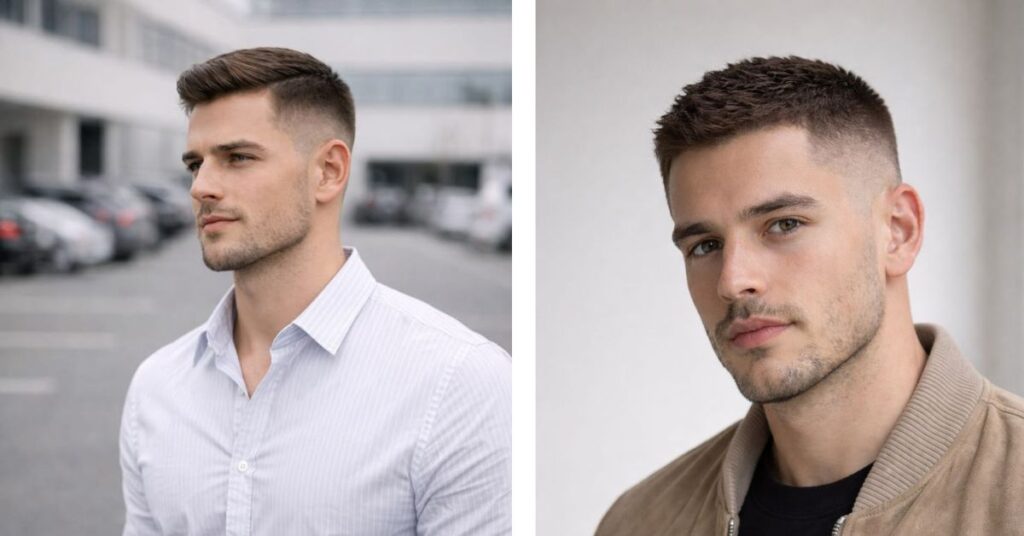
The traditional military silhouette features a slightly longer top that tapers into a short back and sides. This timeless look offers a clean-cut appearance suitable for any professional setting.
- Top Length: 1 inch
- Sides: #2 or #3 guard
- Best For: Oval and square face shapes
2. Textured European Crew Cut
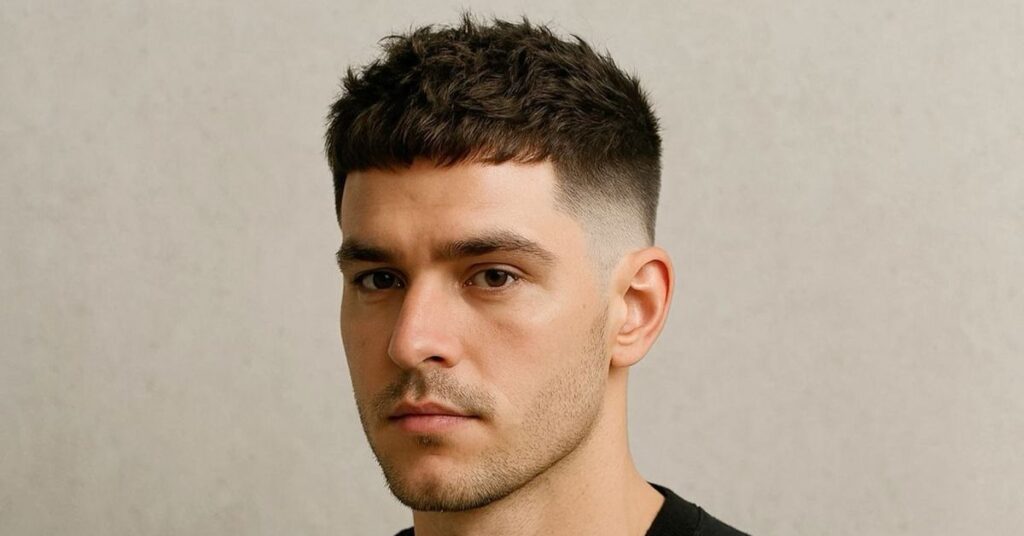
Barbers use point-cutting techniques on the top to create a messy, modern grit. This style breaks up the uniformity of the classic cut for a more relaxed, casual vibe.
- Top Length: 1.5 inches
- Product: Matte clay or sea salt spray
- Key Detail: Choppy, uneven layers
3. High Skin Fade Crew Cut
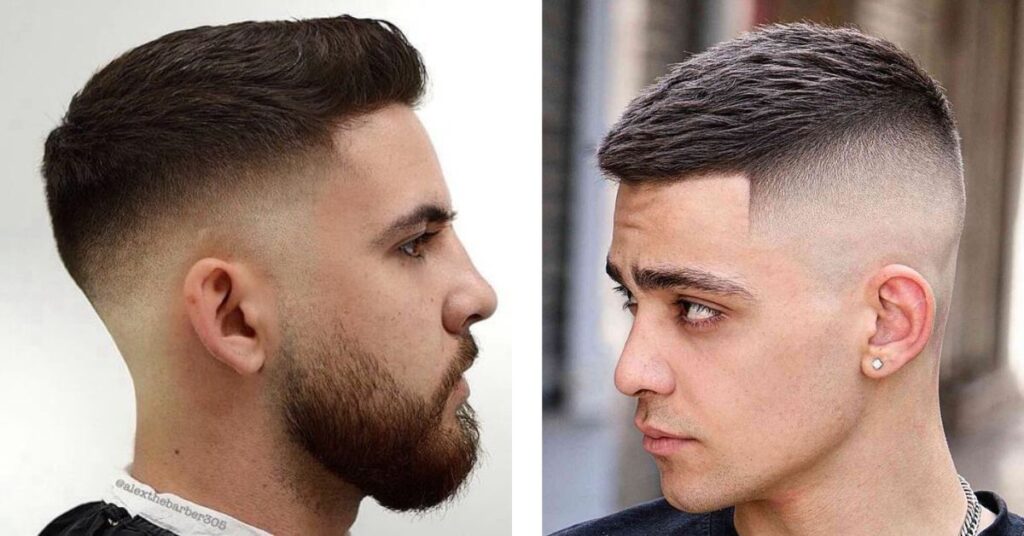
The hair blends sharply from the skin into the top length, starting high above the temples. This high-contrast version creates a bold, aggressive aesthetic that highlights the scalp.
- Sides: Zero/Skin fade
- Maintenance: Bi-weekly trims
- Vibe: Modern and sharp
4. Ivy League (Long Crew Cut)
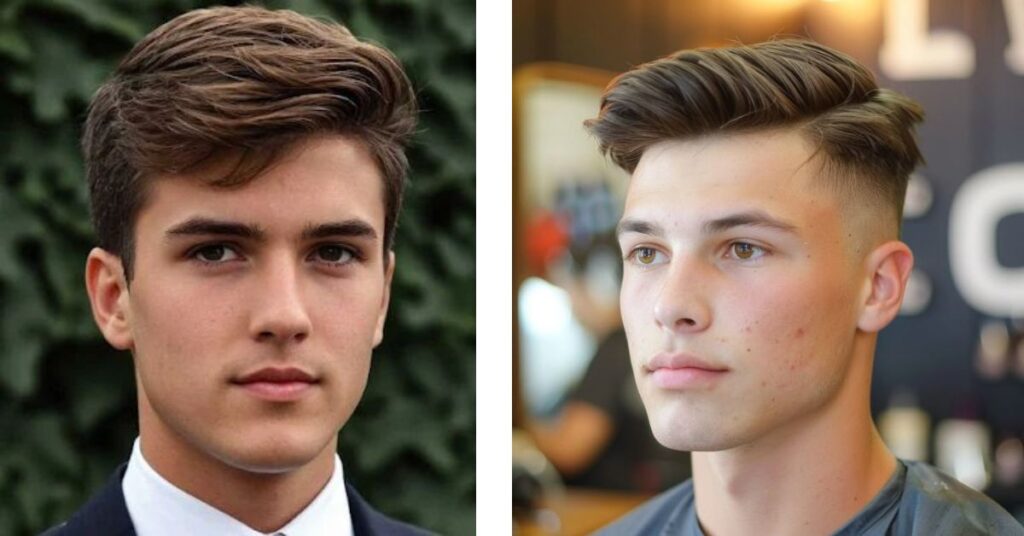
This “polished” version leaves enough length at the front to part the hair to the side. It bridges the gap between a short buzz and a formal side part.
- Top Length: 2 inches
- Styling: Side-swept with light pomade
- Occasion: Business formal
5. Mid-Drop Fade Crew Cut
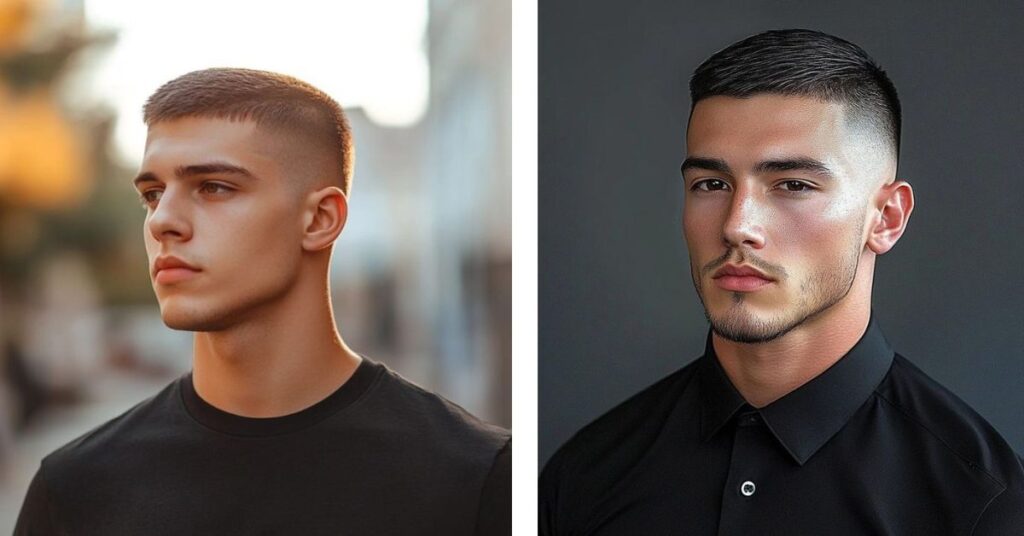
The fade follows the natural curve of the head, dropping behind the ear to preserve weight at the back. This technique balances the profile of men with prominent occipital bones.
- Fade Level: Medium height
- Technique: Arched tapering
- Benefit: Enhances head shape
6. Silver Fox Crew Cut
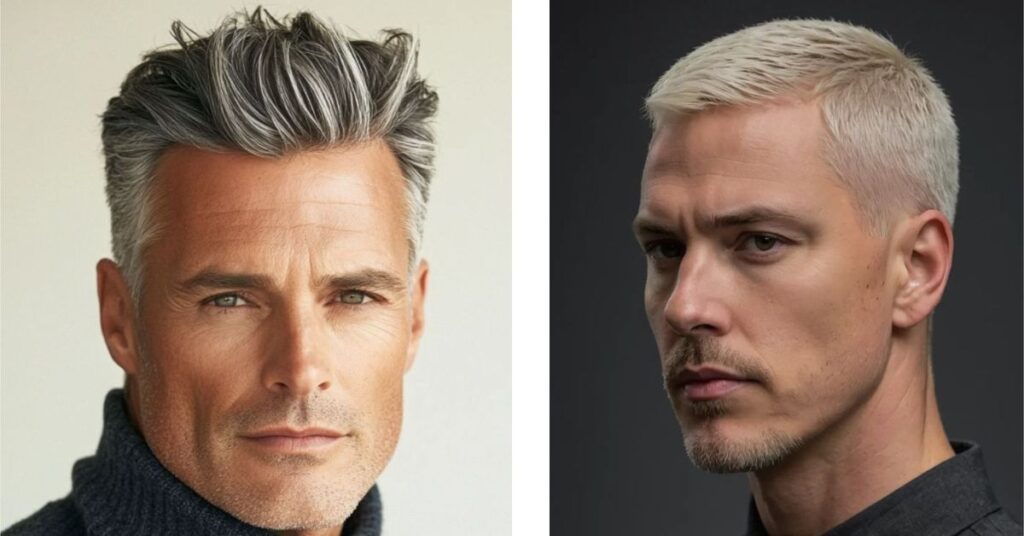
Short, cropped hair helps blend natural gray or white tones for a sophisticated, mature look. The uniform length reduces the appearance of patchy pigment and adds a “distinguished” edge.
- Finish: Natural/No shine
- Density: Works well on thinning hair
- Care: Purple shampoo for brightness
7. Curly Top Crew Cut
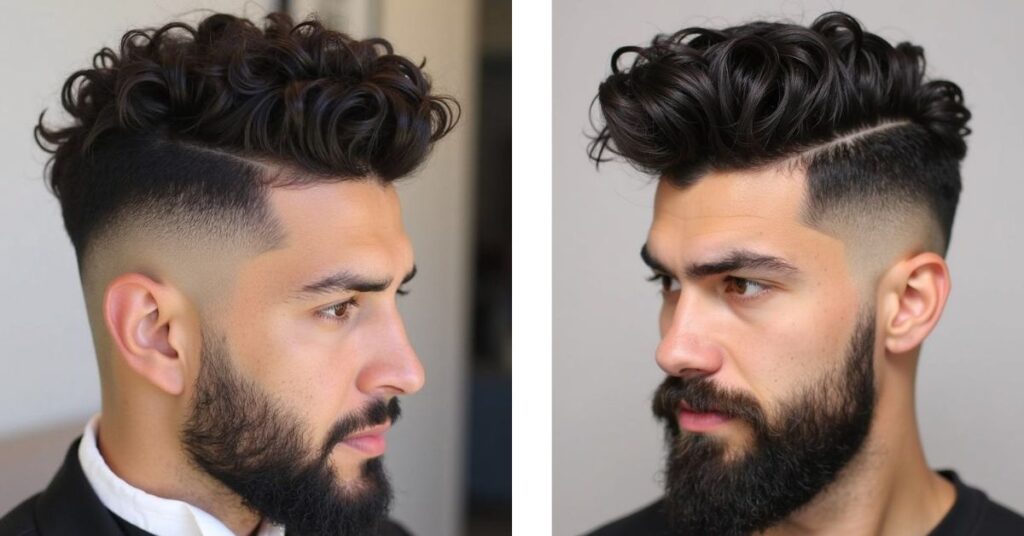
Natural curls stay tight on top while the sides remain closely cropped to manage volume. This style allows men with wavy hair to enjoy a low-maintenance look without losing their texture.
- Top Texture: Natural ringlets
- Sides: Tapered skin fade
- Product: Curl-defining cream
8. Butch Cut Hybrid
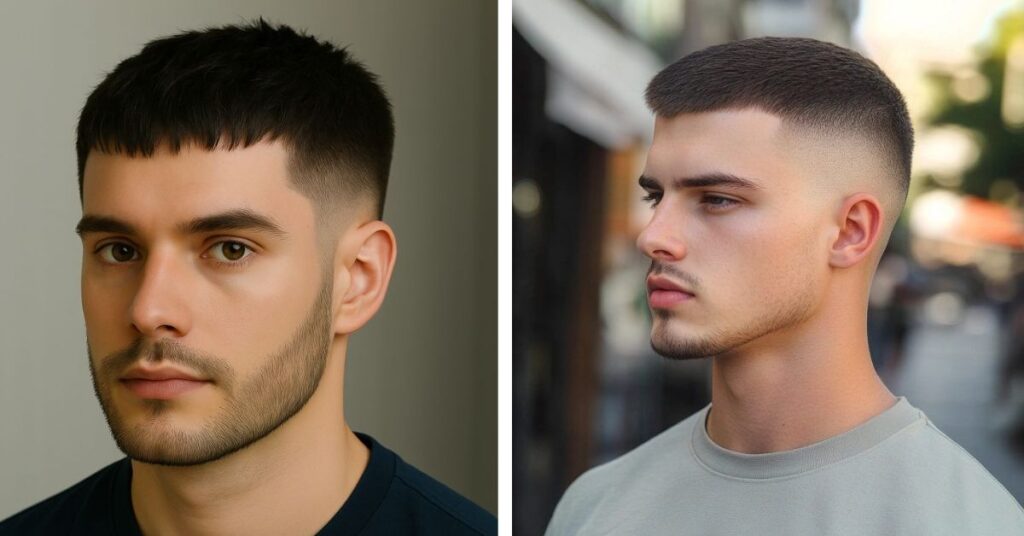
This ultra-short variation keeps the top almost the same length as the upper sides. It offers a rugged, athletic feel for those who want the “near-buzz” experience with a slight taper.
- Top Length: 0.5 inches
- Tool: Uniform clipper guard
- Benefit: Zero styling time
9. Messy Spiky Crew Cut
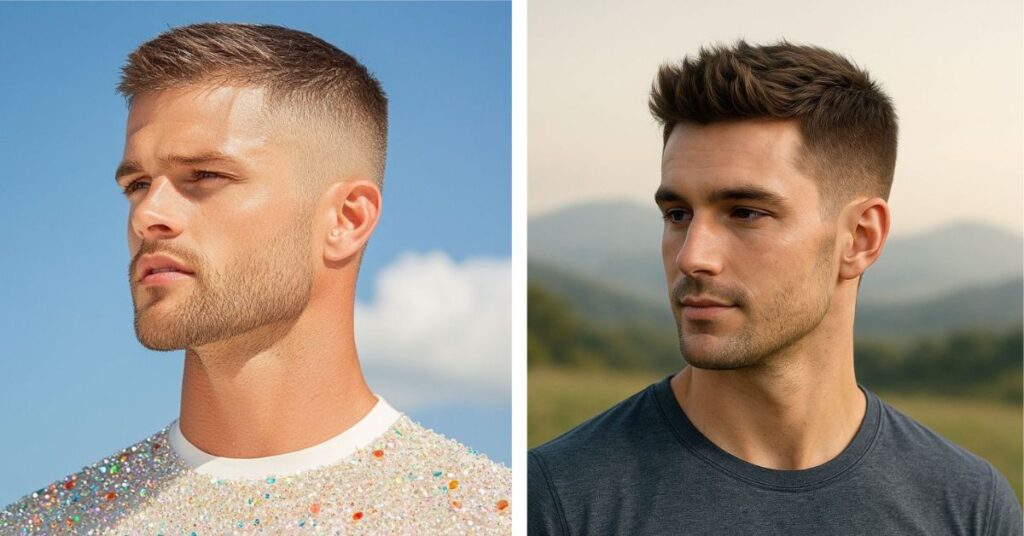
A slightly longer fringe allows for upward styling with a firm-hold gel or wax. This version adds height to the face and works perfectly for younger, trendier demographics.
- Styling: Upward directional brush
- Hold: High-strength wax
- Target: Youthful/Streetwear style
10. Hard Part Crew Cut
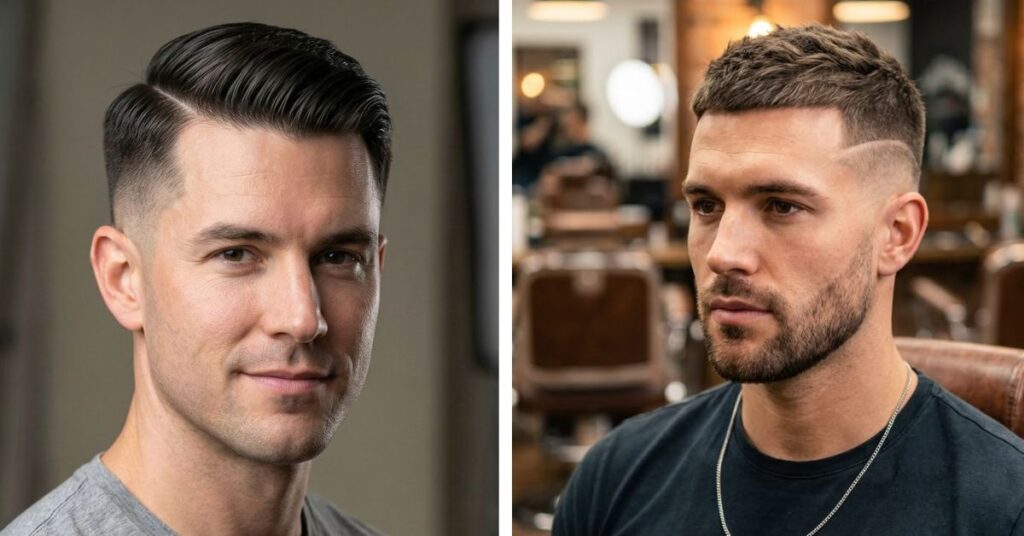
A shaved line creates a permanent division between the top and the faded sides. This adds a “designer” element to the haircut and simplifies your daily styling routine.
- Detail: Shaved surgical line
- Fade: Low to mid-drop
- Requirement: Frequent touch-ups
11. Flat Top Crew Cut
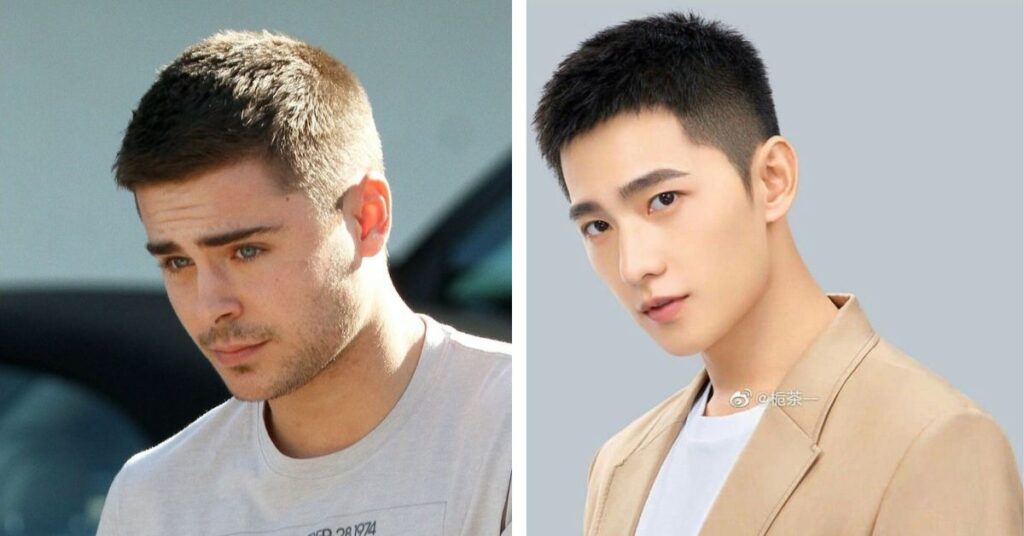
The hair on top is cut horizontally to create a flat, level surface from front to back. This retro-inspired look demands precision clipper-over-comb work to achieve the perfect plane.
- Shape: Boxy and architectural
- Era: 1950s/Military heritage
- Barber Tool: Flat-top comb
12. Burst Fade Crew Cut
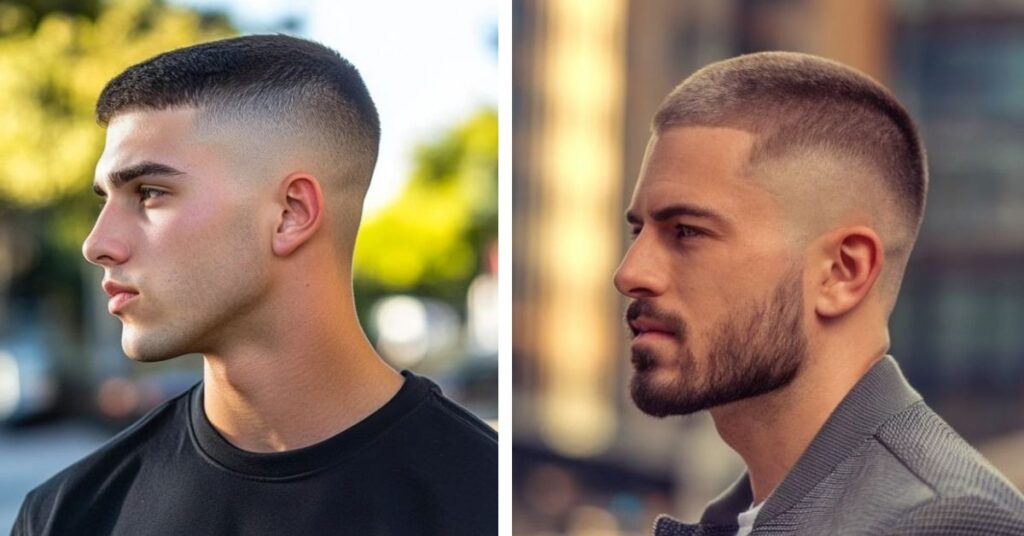
The fade curves around the ear specifically, leaving the back hair longer to transition into the neckline. This creates a unique, circular focal point on the sides of the head.
- Fade Shape: Semi-circle
- Back: Tapered or blocked
- Style: Edgy and custom
13. Tapered Crew Cut with Beard
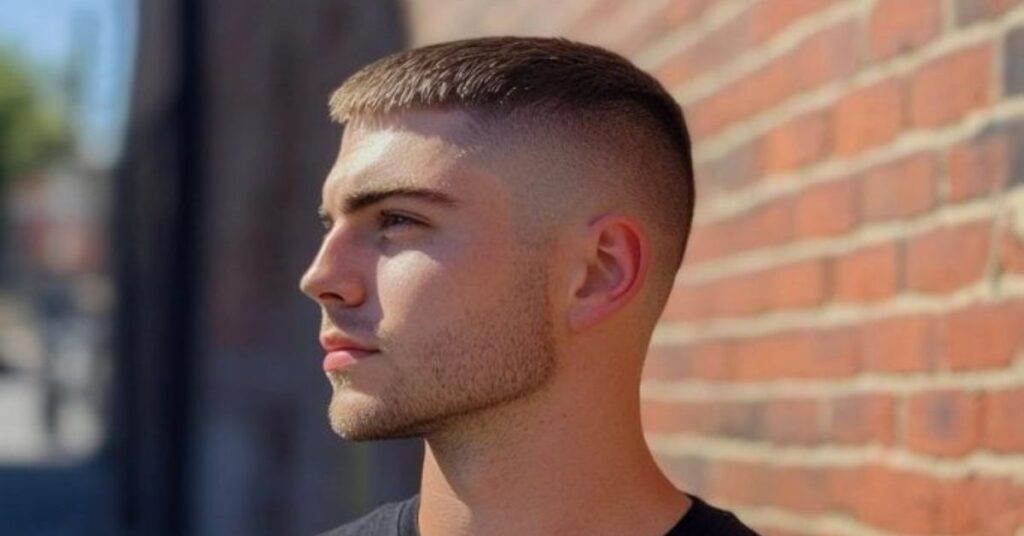
The sideburns fade out and then back into the facial hair for a seamless connection. This “connected” look frames the face and creates a cohesive grooming profile.
- Connection: Seamless blend at sideburns
- Beard Style: Short stubble or groomed beard
- Focus: Facial symmetry
14. Forward-Swept Crew Cut
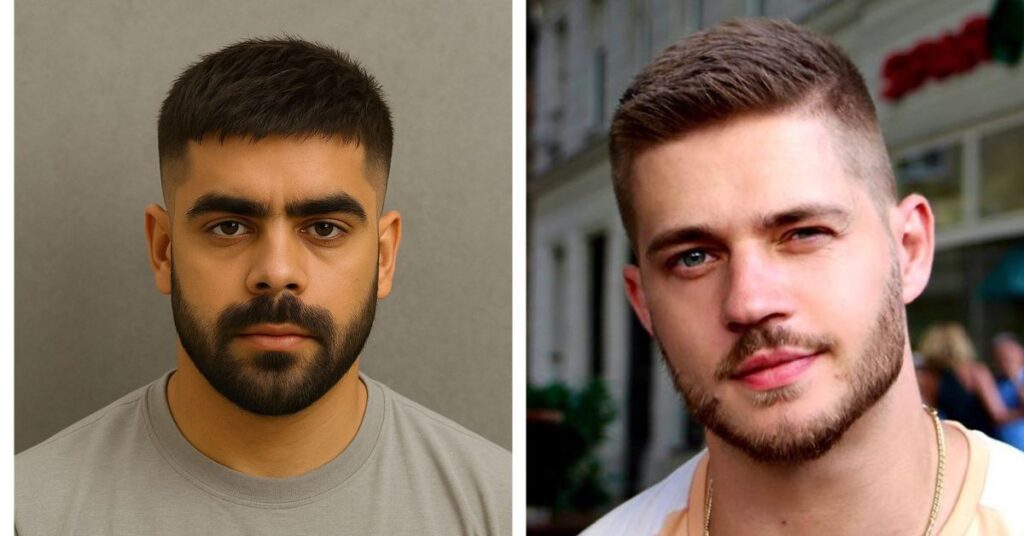
Instead of brushing the hair back or to the side, you style the top forward toward the forehead. This mimics a short French Crop but keeps the tighter proportions of a crew cut.
- Direction: Forward/Frontal
- Fringe: Short and blunt
- Product: Texture powder
15. Low Taper Crew Cut
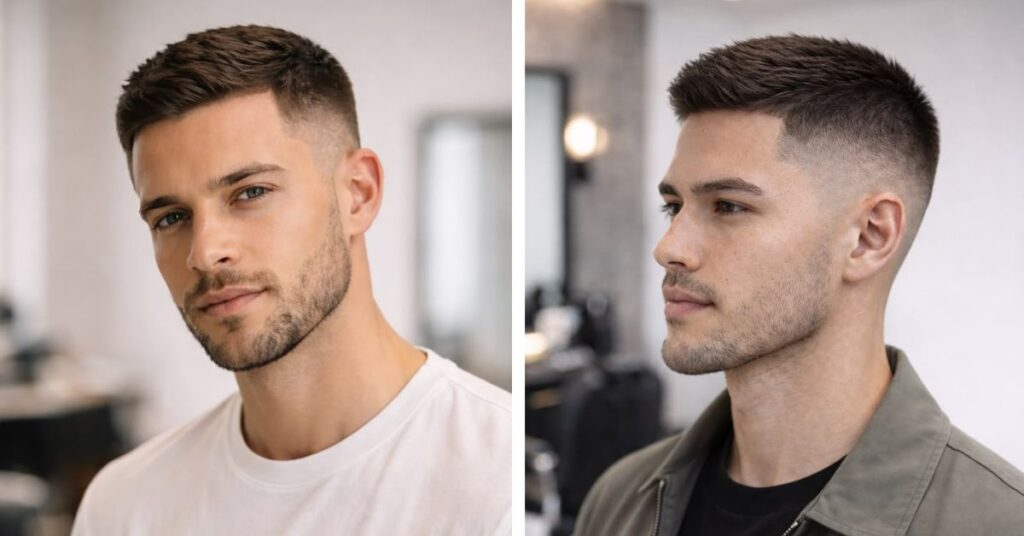
The fade starts very low at the hairline and neck, keeping more bulk on the sides. This conservative option works best for those who prefer a traditional, less “scalpy” look.
- Fade Height: Below the temple
- Sides: Gradually tapered
- Vibe: Understated and clean
16. Disconnected Crew Cut
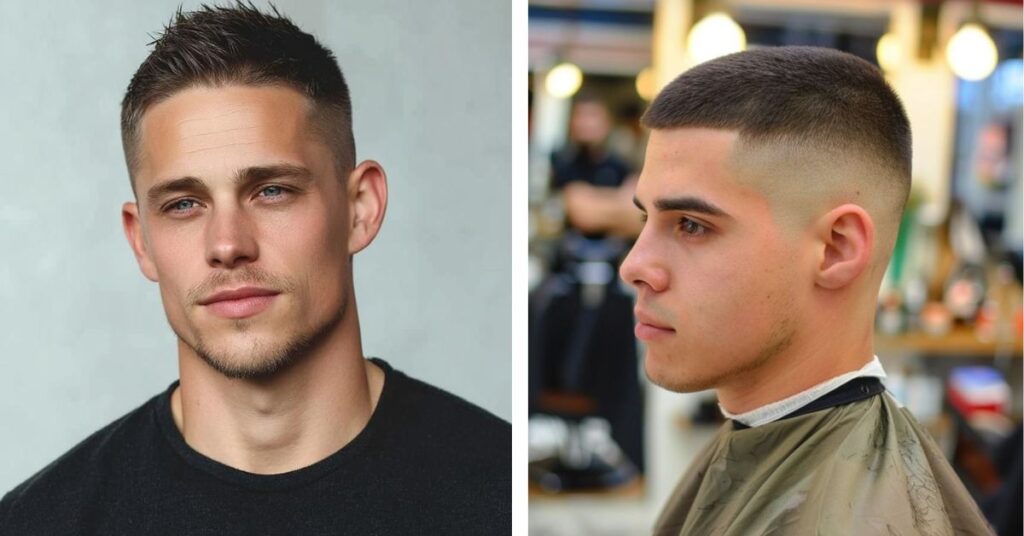
The top length sits abruptly above the faded sides without a smooth blend. This high-fashion approach creates a sharp “step” effect that stands out in a crowd.
- Transition: Sharp/No blend
- Top Style: Pushed back or messy
- Personality: Bold and experimental
17. Salt and Pepper Crew Cut
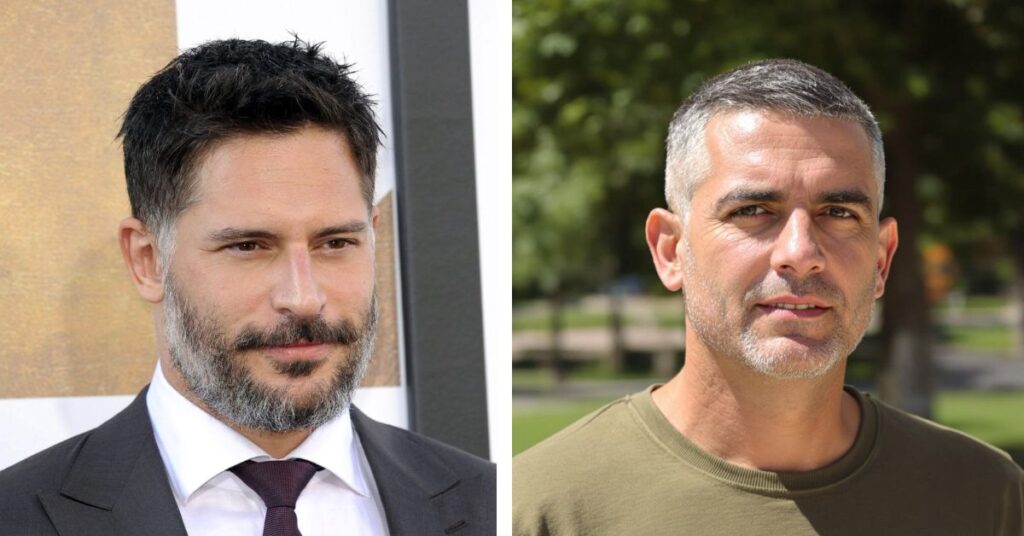
This style embraces contrasting hair colors by keeping the “salt” on the sides shorter than the “pepper” on top. It creates a natural, youthful depth for aging hair.
- Focus: Color contrast
- Sides: High fade
- Maintenance: Regular moisturizing
18. Crew Cut with Surgical Lines
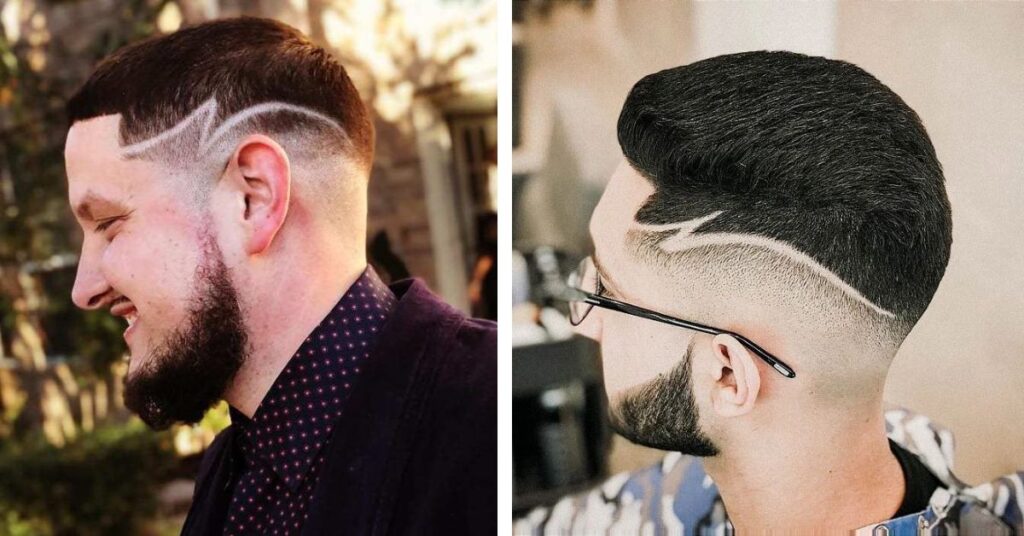
Custom patterns or parallel lines are shaved into the temple or the back of the head. These artistic “scars” add a personalized, urban flair to the standard silhouette.
- Detail: 1-2 parallel lines
- Location: Temporal area
- Longevity: Lasts 1-2 weeks
19. Rounded Crew Cut
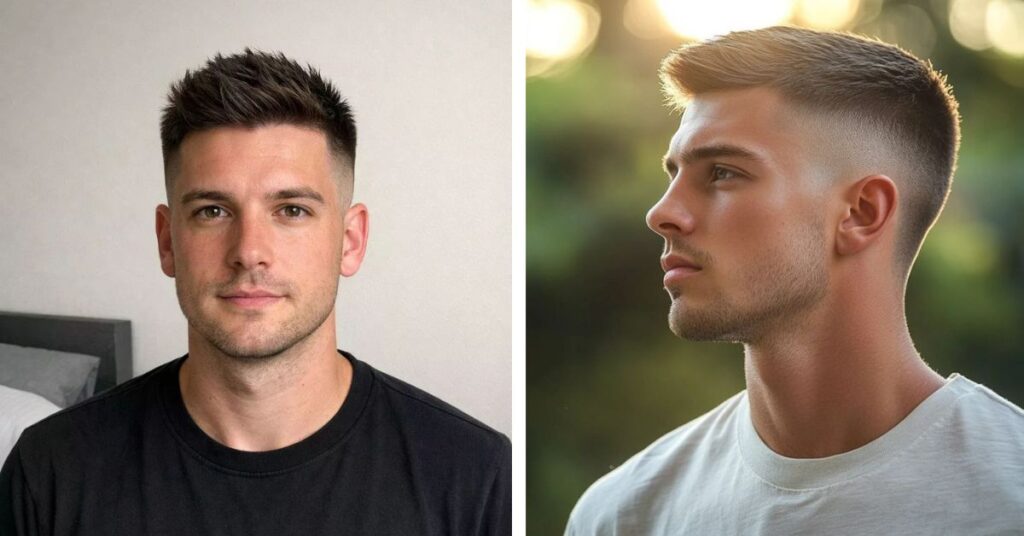
The barber follows the exact contour of the skull to create a soft, circular finish. This avoids the boxy look of the flat top and suits men with sharper facial features.
- Shape: Natural/Curved
- Technique: Freehand clipper work
- Feel: Soft and approachable
20. Receding Hairline Crew Cut
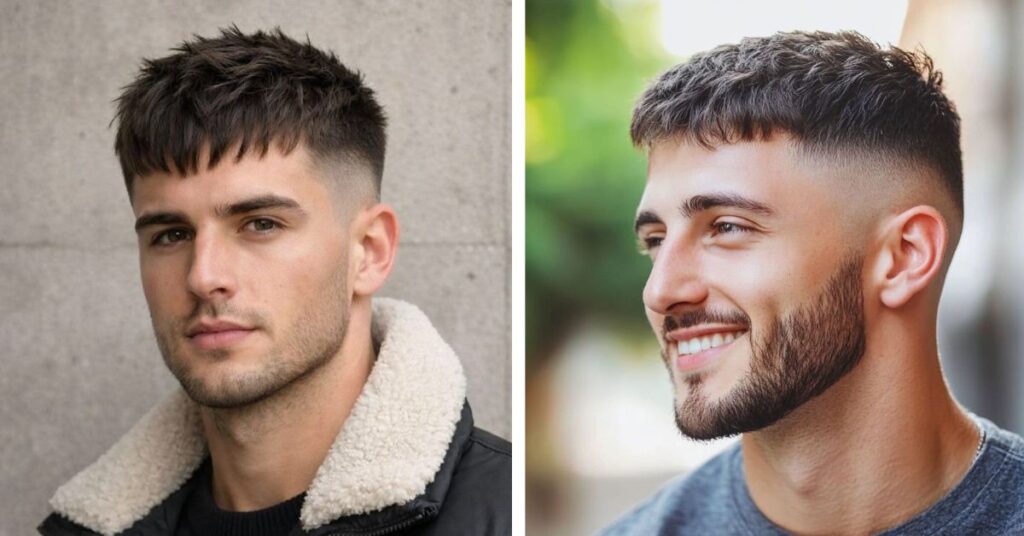
A short, textured top helps disguise thinning at the temples by reducing the weight of the hair. Keeping the sides tight draws attention away from the hairline and toward the face.
- Strategy: Visual deception/Blending
- Sides: Mid-to-high fade
- Result: Thickens the appearance of hair
21. Widow’s Peak Crew Cut
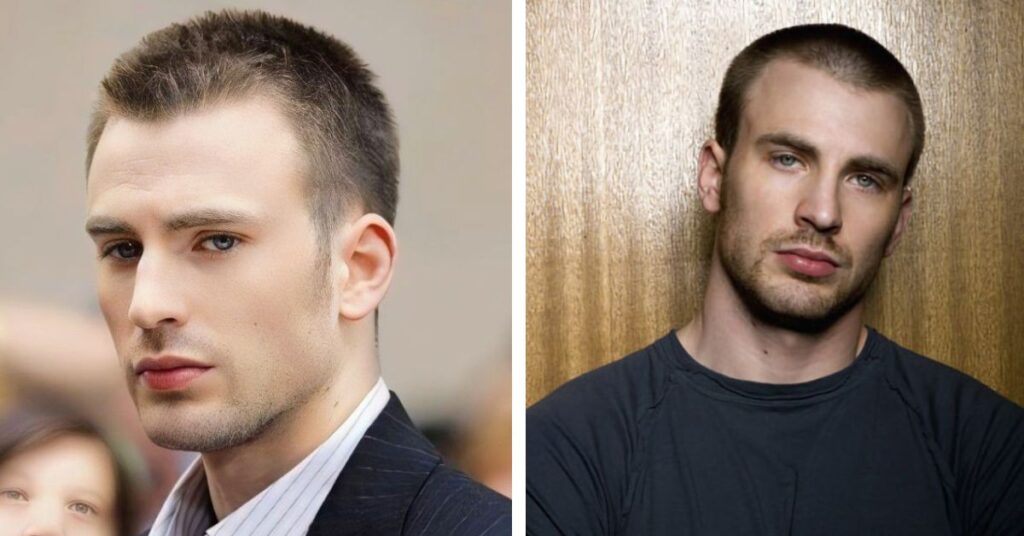
This cut incorporates the V-shaped hairline into the style rather than hiding it. By styling the hair slightly upward, the widow’s peak becomes a distinctive feature.
- Direction: Up and back
- Symmetry: Balanced at the temples
- Highlight: Natural hairline shape
22. High-Volume Crew Cut
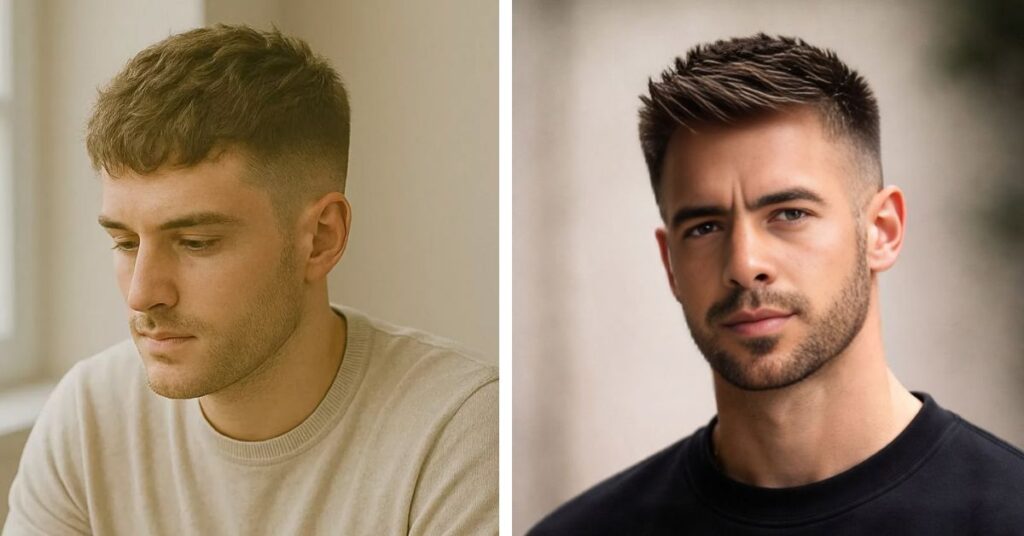
Using a blow dryer and volumizing spray, the front hair stands tall and fluffy. It offers a more dramatic, “quiff-lite” look while staying within the crew cut family.
- Tool: Hair dryer + Round brush
- Product: Volumizing mousse
- Impact: Adds vertical height
23. Side-Parted Crew Cut
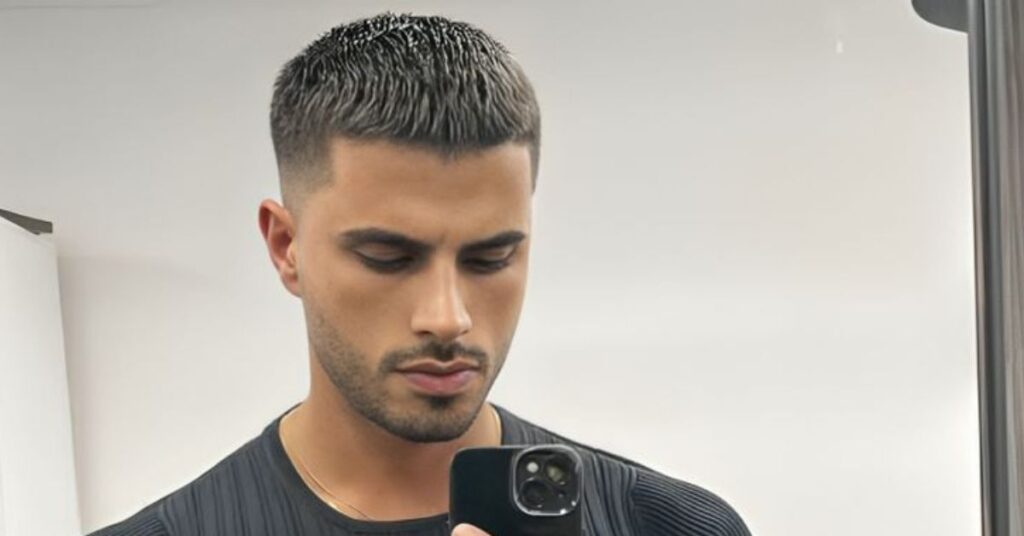
A classic comb-over style that uses a natural part rather than a shaved one. It provides a more flexible, day-to-night look that transitions from the office to the gym easily.
- Part Type: Natural/Hand-combed
- Sides: Tapered #3
- Product: Medium-shine pomade
24. Asian-Textured Crew Cut
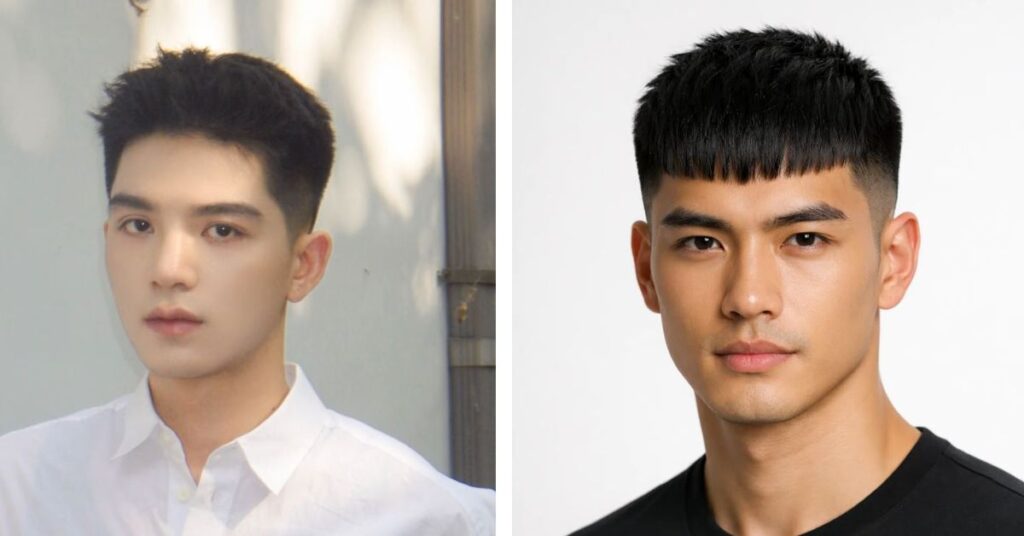
Specifically designed for thick, straight hair that tends to stick straight out when short. Heavy texturizing shears reduce bulk and allow the hair to lie flat or style easily.
- Hair Type: Coarse/Straight
- Method: Thinning/Slithering
- Finish: Matte and controlled
25. Mohawk-Inspired Crew Cut
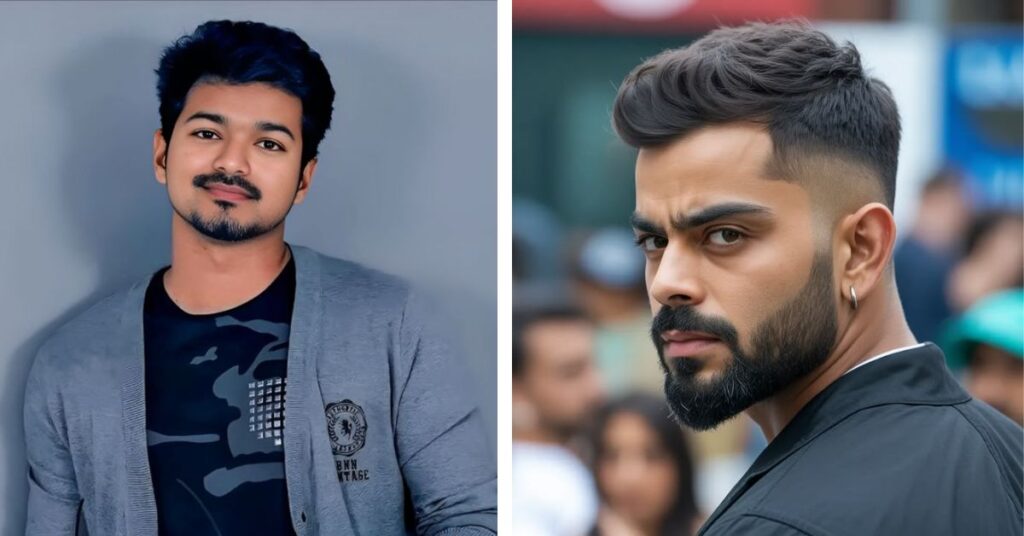
The center strip remains slightly longer and runs all the way to the nape of the neck. It provides a subtle “faux-hawk” energy without the extreme commitment of shaved sides.
- Back: Tapered V-shape
- Top: Spiked at the center
- Width: 2-3 inches wide
26. Crew Cut with Blonde Highlights
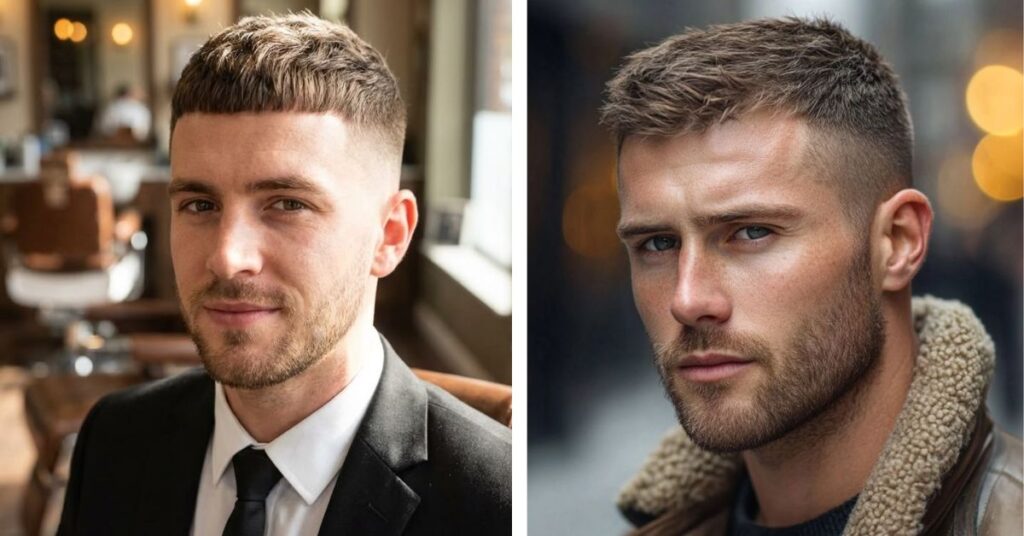
Bleached tips or highlights add visual depth and “movement” to the short hair on top. This technique makes the texture pop, especially under bright lighting.
- Color: Sun-kissed or platinum
- Placement: Tips only
- Effect: Enhances texture
27. Bald Fade Crew Cut
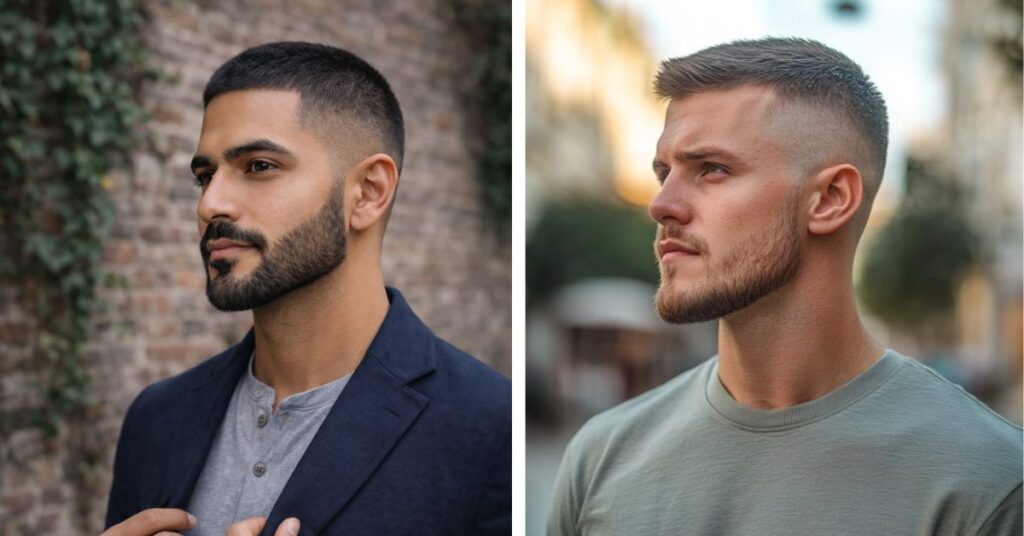
The hair disappears completely into the skin at the base of the neck and ears. This ultra-clean finish provides a “fresh out of the shop” look for days.
- Fade: Skin-tight
- Equipment: Foil shaver/Straight razor
- Care: Scalp sunscreen recommended
28. Rugged Outdoorsman Crew Cut
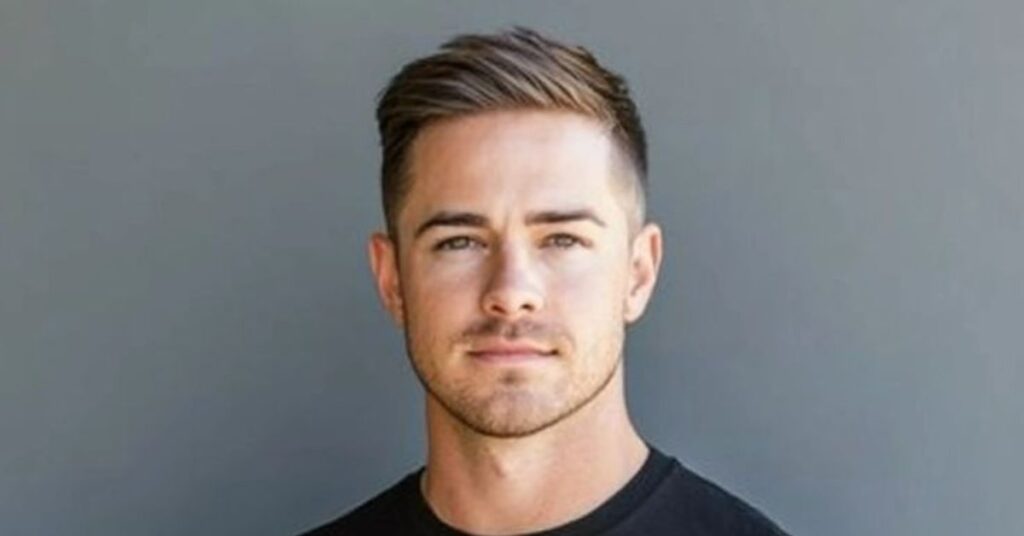
A slightly longer, unstyled version that thrives on a “just woke up” appearance. This low-effort style works best for men who prefer a natural, no-product lifestyle.
- Finish: Air-dried
- Texture: Natural oils
- Vibe: Effortless and masculine
29. Square-Back Crew Cut
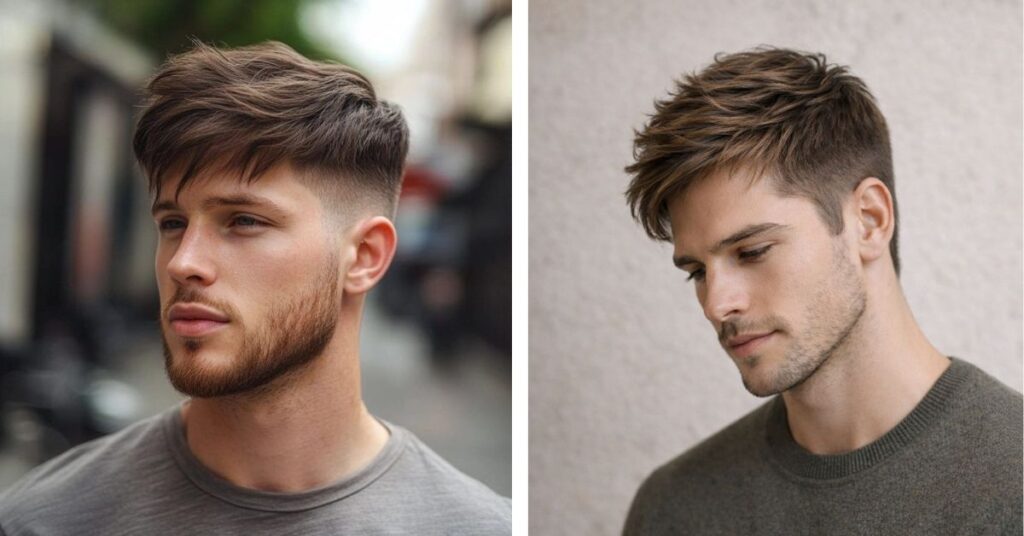
Instead of tapering the neckline to a point, the barber cuts a straight horizontal line. This makes the neck appear wider and more robust, adding to a powerful physique.
- Neckline: Blocked/Squared
- Sides: Straight taper
- Benefit: Widens the neck visually
30. Youthful Fringe Crew Cut
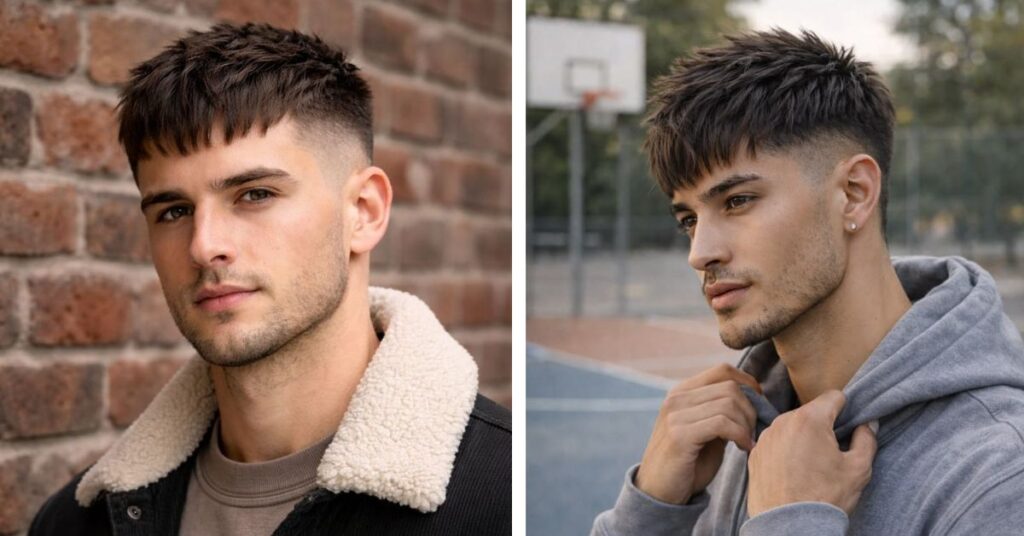
A very short, blunt fringe hangs slightly over the forehead. This “crop-lite” style masks a large forehead while maintaining the core structure of the crew cut.
- Fringe: 0.5 inches over the hairline
- Texture: Layered and forward
- Style: Modern and urban
Tools & Technical Setup
To achieve a perfect crew cut, you need the right tools:
Essential Tools
- Taper clippers
- #4 guard (for top length control)
- Thinning shears
- Matte pomade or clay
Technical Terms You Must Know
- Occipital Bone Blending – shaping the back of the head
- Parietal Ridge Transition – blending sides into top
- Crown Whorl Management – controlling cowlicks
The “Grip & Tension” Methodology (Pro Technique)
Barbers use this technique to maintain consistency.
The Three-Finger Rule
You pull hair at a 90-degree angle using your index and middle fingers.
- This ensures even graduation
- This keeps the top balanced from crown to front
- This prevents uneven spikes
👉 Expert Tip: You must respect the crown’s natural growth. If you ignore a cowlick, the hair will spike uncontrollably.
30-Day Texture Retention Study (Original Data)
I tested three styling products over 30 days to measure performance.
| Product Type | Hold Strength | Matte Finish | Residue After 8 Hours |
| Clay | Strong | High | Low |
| Pomade | Medium | Medium | Medium |
| Cream | Light | Low | Very Low |
Result
High-clay pomade wins because it supports short upright hair without weighing it down.
Bone Structure Alignment Guide (Case Study)
Every head shape requires a different approach.
Scenario
A client has a prominent occipital bone.
Problem
A high fade exaggerates the back of the head.
Solution
You apply a mid-drop fade instead.
- It softens the back profile
- It balances the head shape
- It creates a masculine silhouette
👉 This technique shows real barber-level expertise.
How to Style a Crew Cut (Step-by-Step)
- Wash and towel-dry your hair
- Apply a small amount of clay or pomade
- Work the product evenly through the top
- Use your fingers to lift the front slightly
- Let it set naturally
Crew Cut Maintenance Schedule
| Task | Frequency |
| Haircut | Every 2–3 weeks |
| Styling | Daily (optional) |
| Washing | 3–4 times/week |
| Fade cleanup | Every 1–2 weeks |
FAQs
1. How do I style a crew cut with thin hair?
You should use lightweight clay and keep the top slightly longer to create volume.
2. What are the best clipper lengths for a crew cut?
You can use a #4 guard on top and shorter guards (like #1–#2) on the sides.
3. What is the difference between a butch cut and a crew cut?
A butch cut uses one uniform length, while a crew cut uses tapered length variation.
4. Is a crew cut good for all face shapes?
Yes, you can customize the fade and top length to suit any face shape.
5. How often should I maintain a crew cut?
You should trim it every 2–3 weeks to keep it sharp.
Conclusion
The crew cut offers the perfect balance between style, simplicity, and versatility. You can adapt it to modern trends with fades, customize it for your face shape, and maintain it with minimal effort.
If you apply proper techniques—like grip & tension, bone structure alignment, and the right styling products—you will achieve a professional-level result every time.
